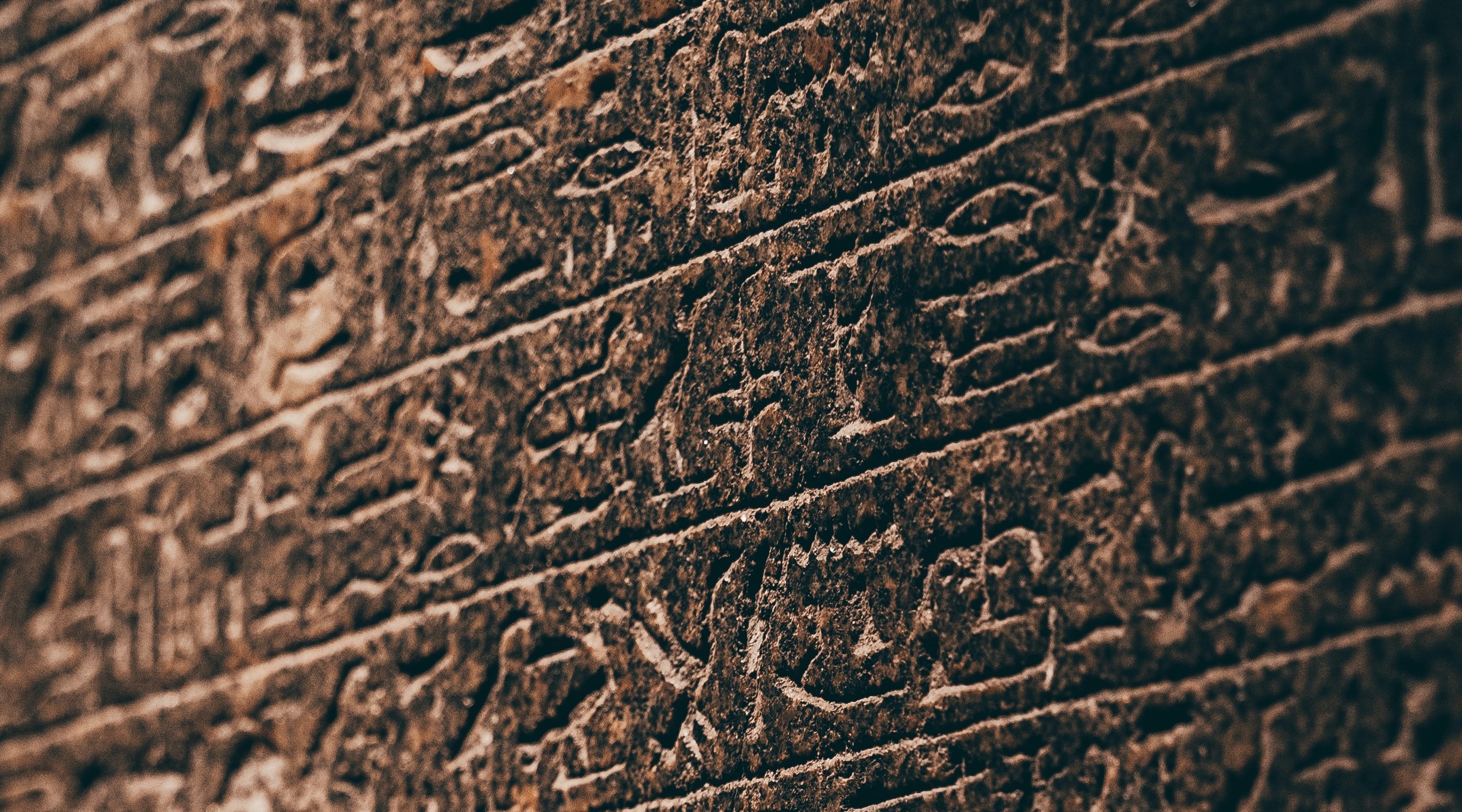
Ancient languages represent humanity's earliest attempts to codify thought, preserve knowledge, and transmit culture across generations. These linguistic systems, some dating back thousands of years, offer invaluable windows into the minds of our ancestors and the civilizations they built. While many ancient languages have ceased to be spoken in daily life, they continue to exert profound influence on modern languages, scholarship, and our understanding of human history.
Defining Ancient Languages
Ancient languages are typically those that flourished in antiquity and are no longer spoken as native tongues in everyday communication. Some exist only in written records, their pronunciation and exact usage lost to time. Others, like Latin and Sanskrit, survive as liturgical, scholarly, or ceremonial languages despite having no native speakers. The study of these languages falls under historical linguistics and philology, disciplines dedicated to reconstructing and understanding languages from fragmentary evidence.
The significance of ancient languages extends far beyond academic curiosity. They contain the foundational texts of major religions, the earliest scientific treatises, epic literature, legal codes, and administrative records that illuminate how ancient societies functioned. Deciphering these languages has unlocked entire civilizations that would otherwise remain mysterious.
Sumerian and Cuneiform: The Dawn of Writing
Sumerian, spoken in ancient Mesopotamia around 3000 BCE, holds the distinction of being among the first languages ever written down. The Sumerians developed cuneiform script, pressing wedge-shaped marks into soft clay tablets. This innovation revolutionized human communication, allowing information to be stored permanently and transmitted across distances and time.
Sumerian was eventually replaced by Akkadian as the spoken language of Mesopotamia, but it continued as a scholarly and liturgical language for nearly two thousand years after its death as a living tongue. The extensive cuneiform archives discovered by archaeologists have revealed everything from administrative records and legal contracts to epic poetry like the Epic of Gilgamesh, one of humanity's oldest literary works.
Akkadian itself, a Semitic language written in cuneiform, became the lingua franca of the ancient Near East, used for diplomacy and trade across vast regions. Subsequent languages like Babylonian and Assyrian were dialects of Akkadian, preserving this linguistic tradition for millennia.
Ancient Egyptian: The Language of Pharaohs
Ancient Egyptian, with its iconic hieroglyphic writing system, served as the language of one of history's most enduring civilizations for over three thousand years. The Egyptian writing system was remarkably sophisticated, employing three scripts: hieroglyphic for monumental inscriptions, hieratic for religious texts and administration, and later demotic for everyday use.
The decipherment of Egyptian hieroglyphs in 1822 by Jean-François Champollion, using the Rosetta Stone, stands as one of the greatest achievements in linguistics. This breakthrough opened vast libraries of texts including religious spells from the Book of the Dead, historical chronicles, medical treatises, and administrative documents that transformed our understanding of ancient Egypt.
Ancient Egyptian evolved through several stages—Old Egyptian, Middle Egyptian, Late Egyptian, Demotic, and finally Coptic, which incorporated Greek letters and survived into the medieval period. Modern Coptic remains the liturgical language of the Coptic Orthodox Church, making it the last surviving descendant of the language of the pharaohs.
Classical Languages: Greek and Latin
Ancient Greek and Latin represent perhaps the most influential ancient languages in Western civilization. Classical Greek, particularly the Attic dialect of Athens, produced an extraordinary body of literature, philosophy, and science that shaped Western thought. The works of Homer, Plato, Aristotle, and countless other writers established genres and ideas that remain central to education and culture.
Greek's influence extended through the Hellenistic period when it became the common language of the eastern Mediterranean and Near East. The New Testament was written in Koine Greek, ensuring the language's continued importance in Christian tradition. Modern Greek, while evolved, maintains continuity with its ancient ancestor, allowing contemporary speakers some access to classical texts.
Latin began as the language of Rome but spread with Roman conquest to become the language of administration, law, and culture throughout Europe. Its influence proved even more enduring than Rome itself. Latin remained the language of scholarship, science, diplomacy, and the Catholic Church throughout the Middle Ages and Renaissance. Scientific nomenclature, legal terminology, and medical vocabulary still draw heavily from Latin.
The Romance languages—Italian, French, Spanish, Portuguese, Romanian, and others—evolved directly from Vulgar Latin, the everyday speech of the Roman Empire. Through these descendants, Latin continues to live and evolve, making it perhaps the most successful ancient language in terms of modern linguistic legacy.
Sanskrit: Sacred Language of India
Sanskrit, the classical language of ancient India, holds a revered position in Hindu, Buddhist, and Jain traditions. The oldest form, Vedic Sanskrit, preserved some of humanity's earliest religious texts, the Vedas, composed around 1500 BCE. Classical Sanskrit, standardized by the grammarian Panini around 500 BCE, became the language of an immense body of literature including epics like the Mahabharata and Ramayana, philosophical treatises, scientific works, and poetry.
Sanskrit's grammatical sophistication impressed modern linguists and contributed to the development of comparative linguistics in the 19th century. Scholars recognized connections between Sanskrit and European languages, leading to the reconstruction of Proto-Indo-European, the hypothetical ancestor of a vast language family.
Unlike many ancient languages, Sanskrit never completely died. It continues as a liturgical language in Hindu ceremonies, a medium for traditional scholarship, and even has a small number of people who use it for daily communication. The Indian government recognizes it as one of the country's official languages.
Ancient Semitic Languages
The Semitic language family includes several important ancient languages beyond Akkadian. Biblical Hebrew, the language of the Hebrew Bible, ceased to be a spoken vernacular after the Babylonian exile but was preserved through religious study and eventually successfully revived as Modern Hebrew in the 20th century—a unique feat in linguistic history.
Aramaic, which replaced Hebrew as the common language of the Jewish people, became another major lingua franca of the ancient Near East. Jesus likely spoke Aramaic, and portions of the biblical books of Daniel and Ezra were written in it. Aramaic dialects continue to be spoken by small communities in the Middle East today.
Phoenician, the language of the great seafaring traders of the Mediterranean, left its most enduring legacy through its alphabet, which became the ancestor of most modern alphabetic writing systems including Greek, Latin, and ultimately our own.
The Enduring Legacy
Ancient languages continue to shape modern life in countless ways. They provide the roots of most English vocabulary, particularly academic and technical terms. They preserve foundational religious and philosophical texts. They offer unique insights into human cognition and cultural diversity. The ongoing work of deciphering and studying ancient languages reveals new chapters of human history and reminds us of the deep continuities connecting us to our distant ancestors.
Whether carved in stone, pressed into clay, or painted on papyrus, ancient languages speak across millennia, testament to humanity's enduring need to communicate, record, and be remembered.