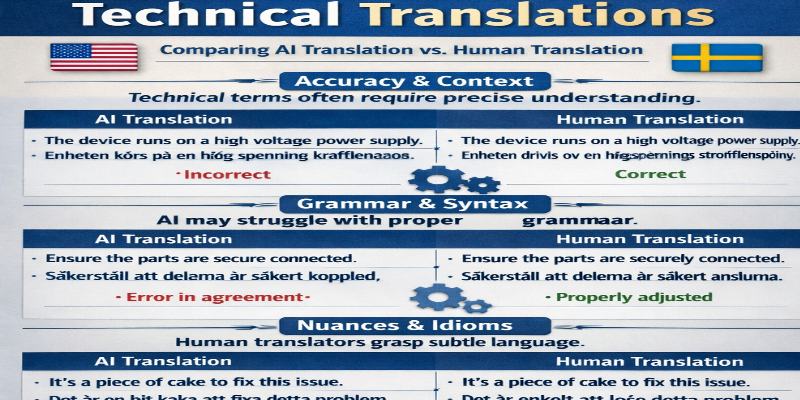
Sweden's position as a global innovation leader in technology, engineering, and sustainable development makes English-Swedish technical translation increasingly critical. As Swedish companies export advanced products worldwide and international corporations establish Nordic operations, the demand for precise technical translation between English and Swedish continues to grow. Meanwhile, artificial intelligence promises faster, cheaper translation solutions. But can AI truly handle the nuances of Swedish technical language, or does this Nordic language pair demand human expertise? The answer reveals surprising complexities hidden beneath these seemingly similar Germanic languages.
The English-Swedish Translation Landscape
English and Swedish share Germanic roots and substantial vocabulary, leading many to assume translation between them is straightforward. This assumption proves dangerously misleading for technical content. While Swedish and English are indeed related, they've evolved differently, creating specific challenges that impact technical translation quality.
The Deceptive Similarity
Swedish and English share many cognates—words with common origins and similar meanings. "Hand" means hand in both languages, "telefon" is telephone, "motor" is motor. This surface similarity can lull translators, both human and AI, into false confidence. However, beneath this familiar vocabulary lie grammatical structures, word formation patterns, and usage conventions that differ significantly.
Compound Word Construction
Swedish, like German, creates compound words by joining existing words into new terms. Technical Swedish generates extensive compounds that pack complex meanings into single words. "Företagsinformationssystem" (business information system), "höghastighetståg" (high-speed train), or "värmepumpsinstallation" (heat pump installation) represent typical technical compounds.
These compounds follow specific construction rules regarding connecting letters (fogvokaler), compounding order, and semantic logic. A technically accurate but improperly constructed compound will immediately identify content as non-native to Swedish technical readers, undermining credibility even when meaning is clear.
Gender and Definiteness
Swedish maintains grammatical gender (common and neuter) that affects article usage and adjective agreement. Technical terminology requires correct gender assignment, and the definiteness system—where Swedish appends definite articles to noun endings rather than using separate words—creates complexity for technical writing.
Consider "motorn" (the motor) versus "en motor" (a motor). Technical specifications must handle definiteness correctly, and errors create ambiguity about whether instructions reference a specific component or any example of that component type.
Word Order Flexibility and Constraints
Swedish allows more word order flexibility than English in some contexts while imposing stricter rules in others. The V2 rule (verb-second) requires finite verbs to occupy the second position in main clauses, affecting how technical procedures and instructions must be structured. This grammatical constraint means English technical writing cannot simply be word-by-word substituted into Swedish syntax.
False Friends and Semantic Shifts
Swedish and English contain numerous "false friends"—words that look similar but mean different things. "Eventuell" in Swedish means "possible" or "potential," not "eventual" (which would be "slutlig"). In technical contexts, these false friends create serious error risks. "Kontroll" means "check" or "inspection," not necessarily "control" (which might be "styrning" depending on context). AI systems frequently stumble over these deceptive similarities.
AI Translation: Capabilities and Limitations for Swedish
Modern neural machine translation has achieved impressive quality for English-Swedish translation, particularly for general content. Services like Google Translate and DeepL handle basic Swedish translation reasonably well. However, technical content reveals persistent limitations.
Where AI Performs Well
High-Resource Language Pair: English-Swedish is a relatively high-resource language pair with substantial training data available. This means AI systems have learned from millions of English-Swedish sentence pairs, enabling decent baseline performance for common content types.
Straightforward Terminology: For standard technical terms with established translations, AI performs reliably. "Computer" becomes "dator," "software" becomes "programvara," and "battery" becomes "batteri" consistently. When technical content uses common, unambiguous terminology, AI translation can be acceptably accurate.
Simple Sentence Structures: Clear, simple technical sentences with standard subject-verb-object structure translate better via AI. A sentence like "Turn off the device before maintenance" becomes "Stäng av enheten före underhåll" quite reliably.
Speed and Volume: AI processes large technical manuals in seconds, providing immediate rough translations useful for comprehension or as drafts for human refinement. For organizations needing to understand Swedish technical documentation quickly, AI offers practical utility.
Where AI Struggles with Swedish Technical Content
Compound Word Formation: AI systems often produce technically accurate but stylistically incorrect Swedish compounds. They might correctly identify component meanings but construct compounds that violate Swedish formation rules or that native speakers wouldn't use. Alternatively, they might fail to compound terms that Swedish would naturally combine, producing awkward multi-word phrases where compounds are expected.
Gender and Definiteness: AI frequently makes errors in grammatical gender assignment and definiteness marking. A technical specification might receive incorrect article forms, or indefinite forms might appear where definite forms are needed (or vice versa). These errors affect technical precision and readability.
Register and Formality: Swedish technical writing tends toward specific formality levels and stylistic conventions that differ from English technical writing. AI typically produces translations that sound more English-influenced than authentically Swedish, affecting professional perception and user acceptance.
Context-Dependent Terminology: Many technical terms have multiple possible Swedish translations depending on specific context. "Process" might be "process," "tillverkningsprocess," "förfarande," or "behandling" depending on whether discussing manufacturing, procedures, or data processing. AI systems sometimes select contextually inappropriate options despite surrounding context that should signal correct meaning.
Complex Technical Instructions: Multi-step technical procedures with conditional logic, cross-references, and complex sentence structures often emerge awkwardly from AI translation. While grammatically correct, the Swedish may be difficult to follow or may not align with Swedish technical writing conventions for instructions.
Cultural and Regulatory Context: Swedish technical documentation must sometimes address Sweden-specific regulations, safety standards, or cultural expectations. AI lacks the cultural competence to recognize when content needs adaptation beyond linguistic translation.
Human Expertise: The Swedish Advantage
Professional Swedish technical translators bring capabilities that current AI cannot replicate, particularly for content where quality, precision, and cultural appropriateness are essential.
Native-Level Language Mastery
Human translators with native Swedish proficiency instinctively construct proper compounds, assign correct gender, and employ natural definiteness marking. They write Swedish that sounds authentically Swedish rather than translated, crucial for professional credibility in the quality-conscious Swedish market.
Technical Domain Knowledge
Specialized translators possess subject matter expertise in fields like engineering, IT, medical devices, or manufacturing. This knowledge enables them to understand technical concepts deeply, recognize and correct source text errors, and select terminology that aligns with Swedish industry standards and conventions.
Cultural and Market Understanding
Swedish markets have specific expectations regarding technical documentation. Human translators understand Swedish user preferences, regulatory requirements, and industry conventions, adapting translations accordingly. They recognize when direct translation would confuse Swedish users and make appropriate cultural adaptations.
Quality Assessment
Experienced translators evaluate translations holistically, considering whether content is not just accurate but clear, professional, and appropriate for Swedish technical audiences. They recognize when technically correct translations might confuse users and find alternative expressions that improve clarity while maintaining accuracy.
Problem-Solving and Adaptation
Technical texts sometimes contain ambiguities, errors, or cultural references requiring creative solutions. Human translators excel at these challenges, finding Swedish expressions that achieve equivalent effects even when direct translation proves impossible or inadequate.
The Hybrid Approach: Optimizing Quality and Efficiency
Sophisticated translation strategies recognize that AI versus human isn't a simple choice but a spectrum of approaches suited to different content types and quality requirements.
Post-Editing Workflows
Post-editing uses AI to generate initial translations that human translators then review and correct. For English-Swedish technical translation, this approach can improve efficiency by 30-40% while maintaining human quality standards. The key is matching post-editing effort to content importance.
Light post-editing fixes obvious errors while accepting some imperfection—suitable for internal documentation or content for basic comprehension. Full post-editing produces publication-quality Swedish—appropriate for customer-facing technical documentation, safety information, or content representing organizational brand and quality.
AI-Assisted Human Translation
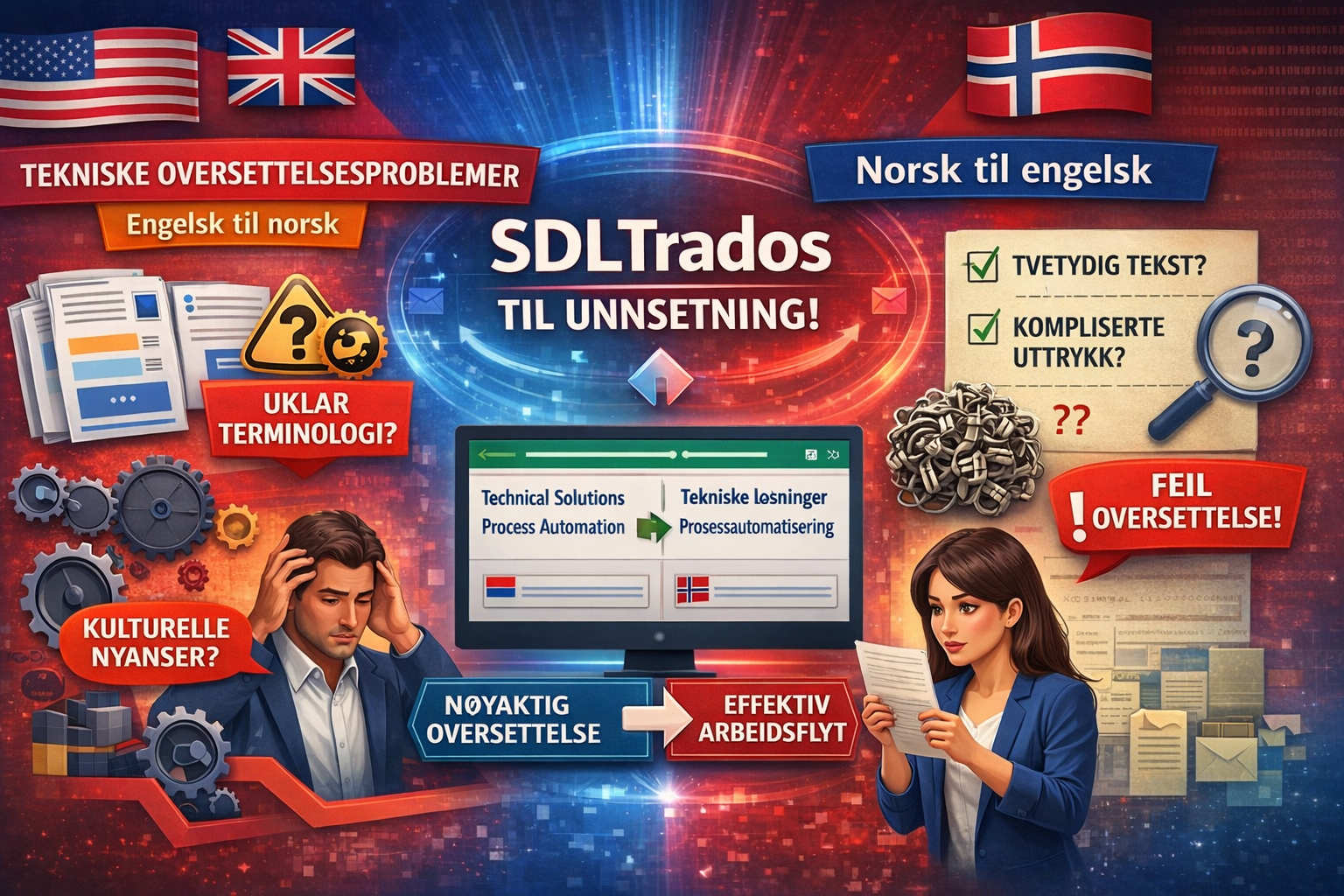
Rather than starting with AI output, this approach has human translators work with integrated AI suggestions. Modern CAT tools like SDL Trados integrate machine translation alongside translation memory matches, letting translators choose when AI suggestions are helpful and when fresh translation is needed. This preserves human control while leveraging AI for efficiency gains.
Content-Appropriate Service Tiers
Strategic translation programs match approach to content:
- Machine Translation Only: Fast, inexpensive, for internal comprehension
- Machine Translation + Light Post-Editing: Moderate cost and quality, for less critical content
- Machine Translation + Full Post-Editing: Higher quality, for important but straightforward technical content
- Pure Human Translation: Premium quality, for complex, safety-critical, or marketing-adjacent content
Professional Translation Tools and Workflows
Professional English-Swedish technical translation relies on sophisticated tools that enhance quality, consistency, and efficiency regardless of whether translation is AI-assisted or purely human.
SDL Trados and CAT Tools
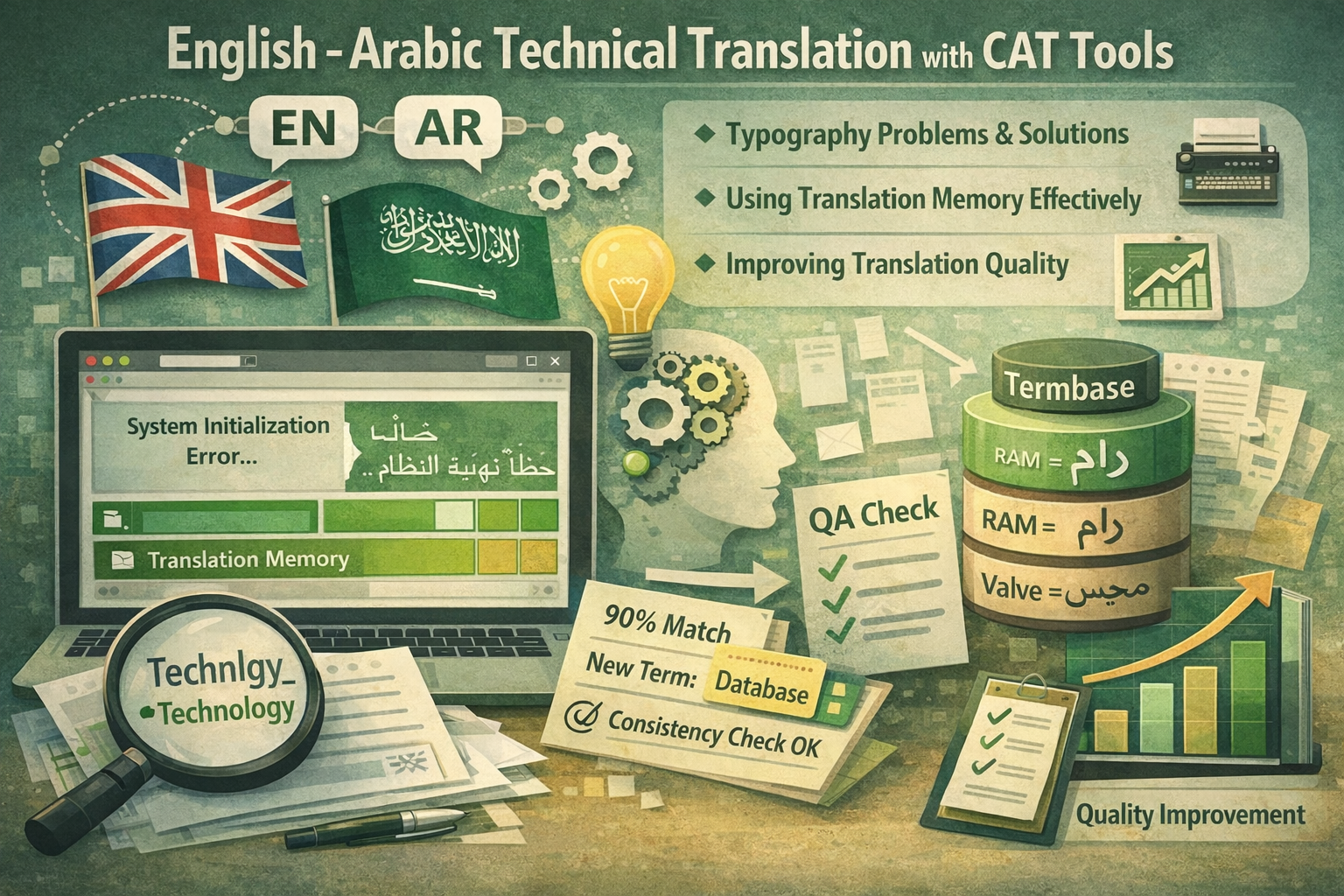
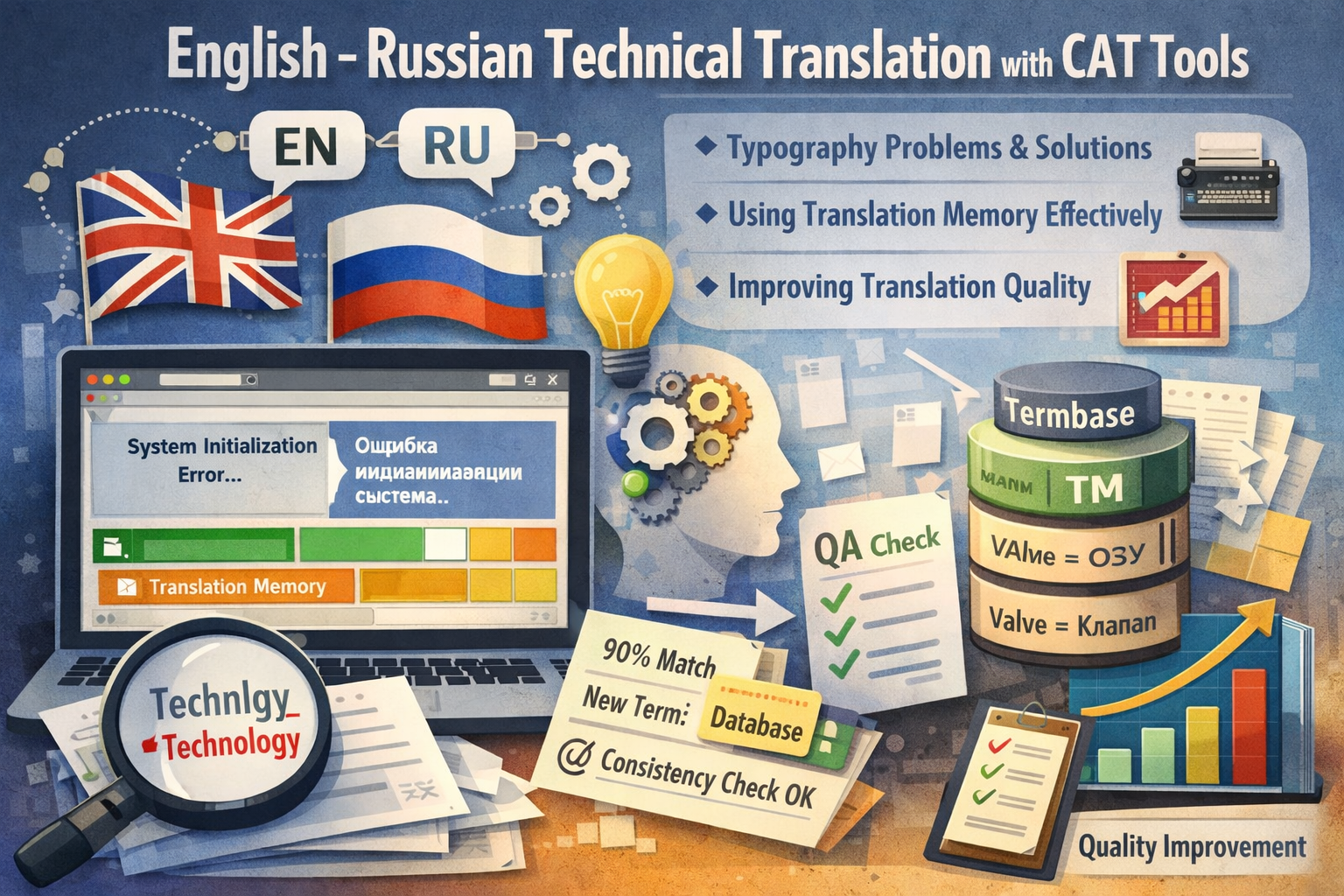
Computer-assisted translation tools remain central to professional workflows. SDL Trados provides translation memories (databases storing previously translated segments) and termbases (terminology management systems), ensuring consistency across projects while enabling translators to leverage previous work.
For English-Swedish technical translation, translation memories prove particularly valuable. Technical documentation for product lines often shares substantial content. User manuals, specifications, and maintenance instructions contain many identical or similar segments across product variants. Robust translation memories allow reuse of proven Swedish translations, improving efficiency while ensuring consistency.
Termbases manage technical vocabulary, ensuring that complex English terms like "servo motor," "heat exchanger," or "microcontroller" consistently receive the same Swedish translations: "servomotor," "värmeväxlare," "mikrokontroller." This consistency is essential for technical clarity and user comprehension.
Making Translation Data Accessible
Professional translation tools store data in formats optimized for translation workflows but not necessarily for broader business use. Organizations increasingly need translation data accessible to stakeholders who don't use specialized translation software.
Converting SDL Files with linigu.cloud
Services like linigu.cloud address this need by converting SDL file formats into bilingual Excel or Word files. This conversion makes English-Swedish translation data accessible to project managers, subject matter experts, and clients who need to review translations without learning CAT tools.
For English-Swedish translation specifically, bilingual files enable efficient review processes. Swedish native speakers—product managers, engineers, or marketing teams—can review Swedish translations alongside English source text, identifying technical inaccuracies or awkward phrasing even without translation expertise.
Excel formats facilitate terminology extraction and analysis. Organizations can build comprehensive English-Swedish glossaries from completed projects, developing terminology databases that support future translation consistency and quality. These extracted terms feed back into termbases, creating continuous improvement cycles.
Best Practices for English-Swedish Technical Translation
Invest in Source Content Quality
Clear, well-written English source text translates better whether by AI or humans. Ambiguous references, unclear antecedents, and overly complex sentences create problems for both. Organizations should invest in English technical writing quality, potentially using controlled language guidelines or editing processes before translation.
Build Swedish Translation Assets
Systematic use of translation memories and termbases compounds benefits over time. Each project contributes to institutional knowledge, improving both efficiency and consistency. For Swedish technical translation, comprehensive termbases ensure standardized terminology aligned with Swedish industry conventions and user expectations.
Choose Approach Based on Content
Not all content requires identical quality levels. Internal technical notes might work fine with raw machine translation, while product specifications require human expertise and customer-facing content demands native Swedish polish. Strategic decisions optimize cost-effectiveness without compromising essential quality.
Engage Native Swedish Reviewers
For important content, engage native Swedish speakers—ideally with technical expertise—in review processes. They identify issues that even excellent translators might miss and ensure final content meets Swedish market expectations.
The Swedish Context: Quality Expectations
Swedish markets are known for high quality expectations and attention to detail. Technical documentation that appears poorly translated or that contains grammatical errors can significantly impact brand perception and product acceptance. This context makes quality particularly important for English-Swedish technical translation, potentially favoring human expertise over AI expediency for customer-facing content.
Conclusion
English-Swedish technical translation presents unique challenges despite the languages' Germanic kinship. Surface similarities mask deeper structural differences, compound word complexity, and cultural conventions that impact technical communication quality. AI translation has achieved impressive capabilities for this language pair, offering practical utility for comprehension and draft generation. However, technical content demanding precision, cultural appropriateness, and professional polish continues to benefit from human expertise.
The optimal approach combines AI efficiency with human quality judgment, matching translation method to content importance while leveraging professional tools like SDL Trados to maintain consistency. Services like linigu.cloud enhance workflows by making translation data accessible beyond specialized tools, enabling broader organizational participation in quality assurance.
As AI technology advances, English-Swedish translation will continue evolving, but the Swedish market's quality expectations and the language's unique characteristics ensure that human expertise remains valuable for content where precision and professionalism matter. The future lies not in choosing between AI and human translation but in thoughtfully integrating both to serve the demanding Swedish technical market effectively.
Comments ()
No comments yet. Be the first to comment!