
TAG Issues and How SDL Trados Provides Effective Solutions
Technical translation between English and Spanish may look straightforward at first glance, but in practice it is one of the most error-prone language pairs in technical documentation. Differences in grammar, terminology, punctuation, and formatting — combined with complex file structures — often lead to TAG-related problems that can break layouts or distort meaning.
This article explores the most common technical translation problems, especially TAG issues, and explains how SDL Trados helps translators solve them efficiently and safely.
1. Why English–Spanish Technical Translation Is Challenging

Technical content includes:
-
Software UI strings
-
Engineering manuals
-
Legal and compliance documents
-
Medical and industrial instructions
Unlike creative translation, technical translation requires:
-
Absolute accuracy
-
Structural consistency
-
Correct formatting and tagging
-
Terminology compliance
Even small mistakes can lead to software errors, usability problems, or legal risks.
2. English to Spanish: Common Technical Translation Problems
a) Sentence Expansion
Spanish translations are often 20–30% longer than English. This causes problems in:
-
Software interfaces
-
Tables
-
Labels and buttons
Without CAT-tool support, translators may unintentionally break tags or layouts.
b) Terminology Consistency
English technical terms may have:
-
Multiple Spanish equivalents
-
Region-specific variations (Spain vs Latin America)
Inconsistent term usage reduces clarity and professionalism.
c) Verb Tense and Formality
English technical texts are usually neutral. Spanish requires careful decisions between:
-
Imperative vs infinitive
-
Formal vs neutral tone
Inconsistent choices confuse end users.
3. Spanish to English: Hidden Risks
a) Ambiguous Structures
Spanish allows longer, more flexible sentences. When translated literally:
-
English output may sound vague
-
Instructions may lose precision
b) False Friends
Words like actual, eventual, or sensible can easily be mistranslated into incorrect English meanings.
c) Implicit Information
Spanish technical texts sometimes omit subjects or rely on context. English usually requires explicit clarity.
4. What Are TAGs and Why They Matter?
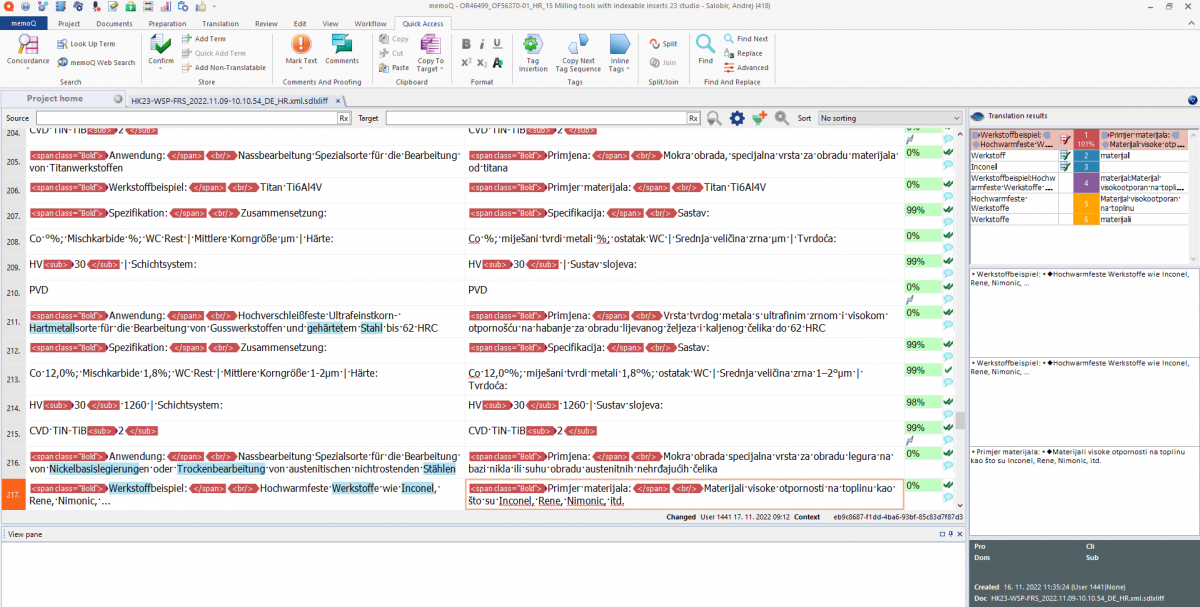
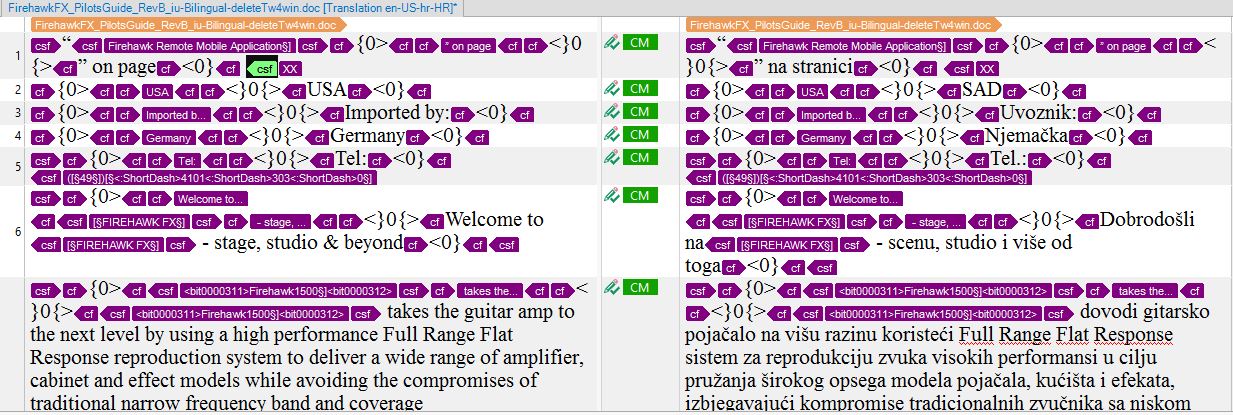

TAGs are non-translatable elements embedded in files, such as:
-
XML / HTML code
-
Formatting markers
-
Variables and placeholders
-
Software strings
Incorrect handling of TAGs can:
-
Break software builds
-
Corrupt files
-
Cause runtime errors
-
Make documents unusable
TAG errors are among the most common technical translation failures.
5. Common TAG Problems in English–Spanish Translation
a) Missing TAGs
Translators accidentally omit tags when editing longer Spanish sentences.
b) Incorrect TAG Order
English and Spanish sentence structures differ, but TAG order must remain intact.
c) Modified TAG Content
Even a small change inside a TAG can invalidate the file.
d) Duplicated TAGs
Copy-paste errors may duplicate placeholders, causing system crashes.
6. How SDL Trados Solves TAG Problems
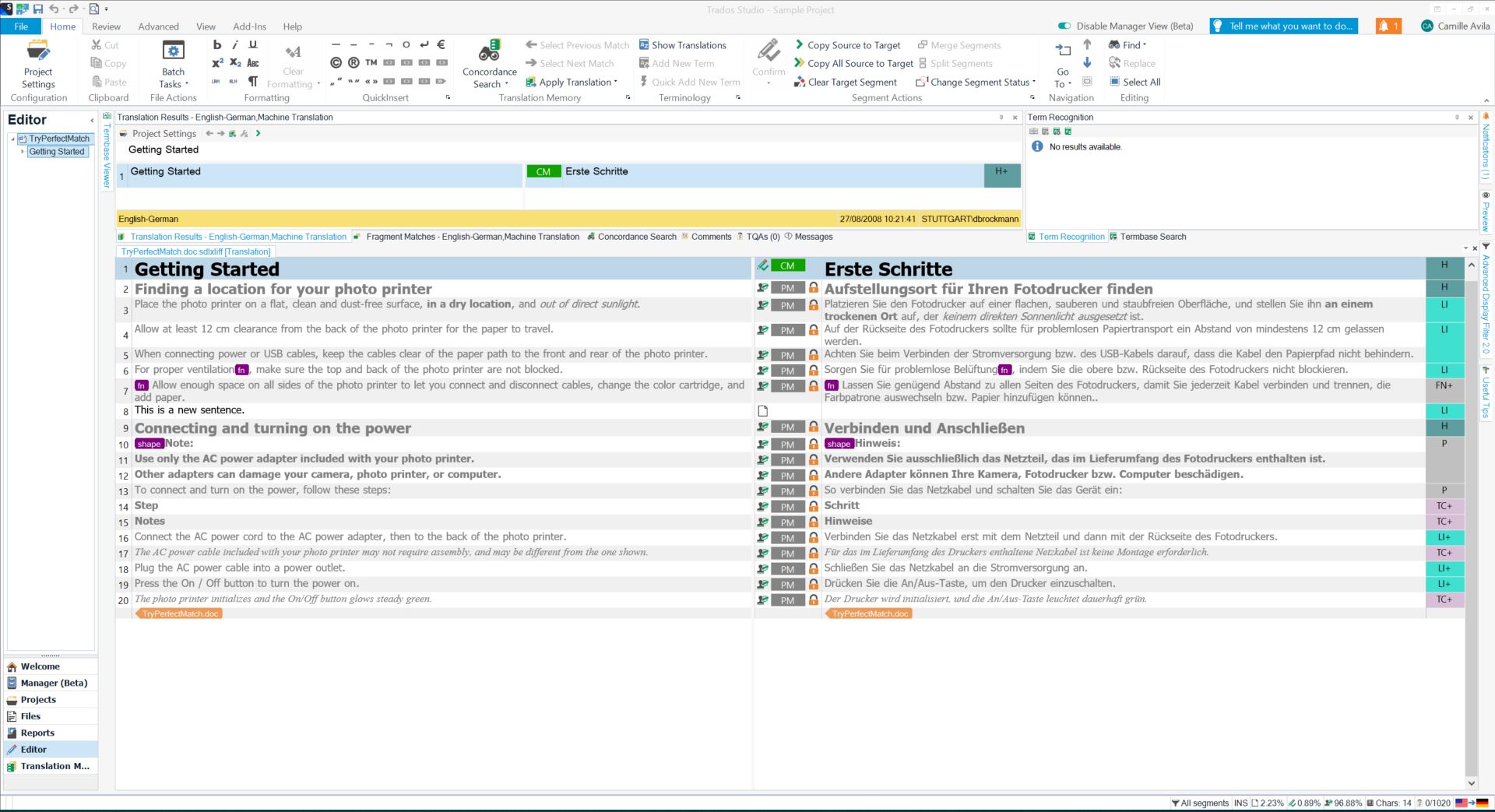
SDL Trados is built specifically to prevent and manage TAG-related issues.
a) Protected TAG Handling
-
TAGs are visually separated from text
-
Accidental edits are prevented
-
Inline and structure tags are clearly marked
b) Automatic TAG Verification
SDL Trados checks:
-
Missing tags
-
Wrong order
-
Extra or altered tags
Errors are flagged before delivery.
c) Segment Locking and Validation
Critical segments can be locked, ensuring that structural elements remain untouched.
7. Quality Assurance (QA) in SDL Trados
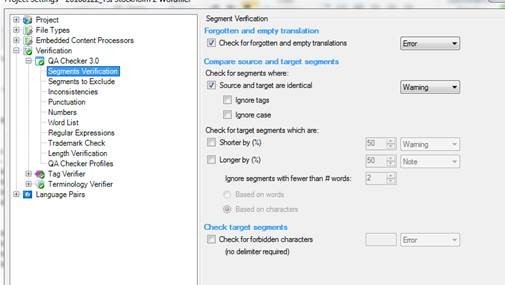
SDL Trados includes built-in QA checks for:
-
TAG consistency
-
Number mismatches
-
Terminology violations
-
Incomplete translations
This dramatically reduces post-delivery corrections and client complaints.
8. Best Practices for English–Spanish Technical Translation
To get the best results:
-
Always use a CAT tool like SDL Trados
-
Maintain updated Translation Memories
-
Build and enforce terminology databases
-
Run full QA checks before delivery
-
Combine automation with human expertise
SDL Trados does not replace translators — it empowers them.
Conclusion
Technical translation between English and Spanish is far more complex than it appears. TAG errors, terminology inconsistencies, and structural differences can easily compromise quality and functionality.
SDL Trados provides the tools needed to:
-
Protect file integrity
-
Prevent TAG-related errors
-
Maintain consistency
-
Deliver professional, reliable translations
For technical translators and localization teams, SDL Trados is not optional — it is essential.
Comments ()
No comments yet. Be the first to comment!